

The Tie Edit
Nobody talks about their tie.
Until they wear one of these.
Featured in GQ. Worn in the White House. Built for every man in between.
Build your bundleIt started with a single complaint. Not a review. Not a focus group. A complaint, from a man who had spent more money than he cared to admit on ties that kept letting him down.
He could not explain exactly how they were letting him down. They looked fine. They were the right width, the right length, the right colours for his wardrobe. But something was wrong in a way he had never quite been able to name.
He named it eventually.
They felt cheap.
Not looked cheap. Felt cheap. In the hand, against the shirt, through the knot. There was a limpness to them, a lightness that communicated something he did not want communicated in the rooms he was walking into.
He was not alone.
Two brothers in Australia were hearing the same thing from men all over the world. Not as a complaint. As a resignation. Men had simply accepted that ties were the part of the outfit you did not think too hard about. You bought one for a wedding. You bought one for an interview. You bought the navy stripe because it always worked and you did not have time to think beyond that.
The brothers thought differently.
They believed the tie was the most underserved garment in a man's wardrobe. The one with the most potential to change how an outfit read, and the least attention paid to how it was actually made.
So they made one properly.
Then another. Then another.
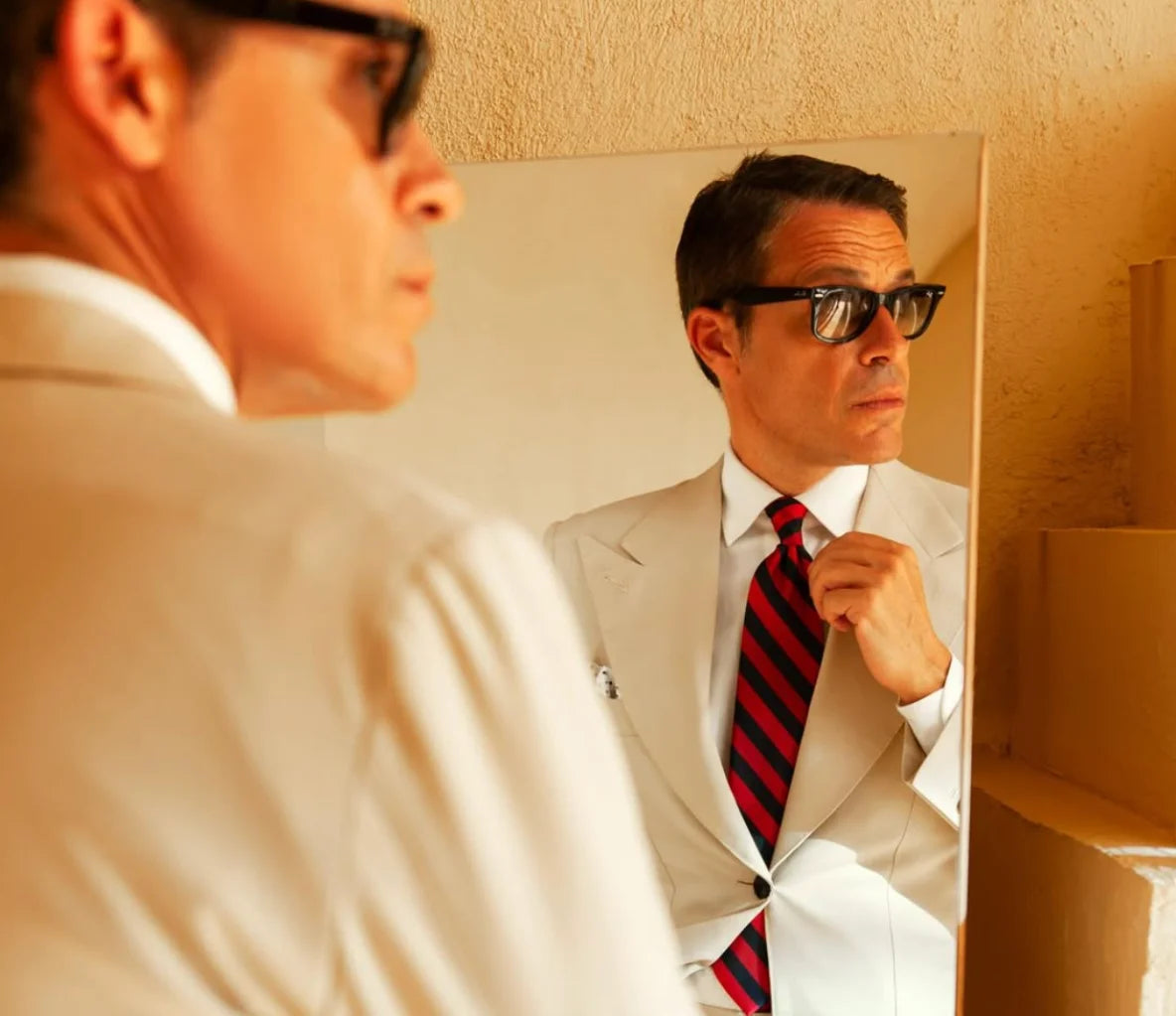
Woven construction: the drape and weight of silk, without the fragility.
What happened next is the part that is difficult to explain without sounding like marketing.
So here are the numbers instead.
16,800 five-star reviews. An editorial feature in GQ. Ties that found their way, without being placed there, into the wardrobes of men who dress in rooms where the wrong choice would be noticed immediately.
Those are not the numbers of a brand that got lucky with a campaign. They are the numbers of a product that does something most men did not know a tie could do.
They land differently on the body. The woven construction gives them the drape and weight of silk without the fragility. The knot sits where it should and stays there. The dimple does not migrate. A man who has worn ties for thirty years picks one up and something shifts in him, a recognition that what he has been wearing until now was a different category of object entirely.
This is the complaint, finally answered.
There is a room where the tie matters.
You know the one. It might be a boardroom or a wedding or a client dinner or the kind of Saturday night where getting it right is part of the point. In that room, the tie is either an asset or a liability. There is no neutral.
The men who understand this think about ties the way they think about any other tool. Not sentimentally. Not aspirationally. Practically. They want a specific answer for a specific situation. And they want that answer already hanging in the wardrobe when the situation arrives.
This is the part where most tie advice falls apart.
Most advice tells you what to buy. It does not tell you what to build. A wardrobe of ties is not a collection of individual purchases. It is a system. And a system that works requires range across four distinct categories, each one covering situations the others cannot.
Here is what that looks like.
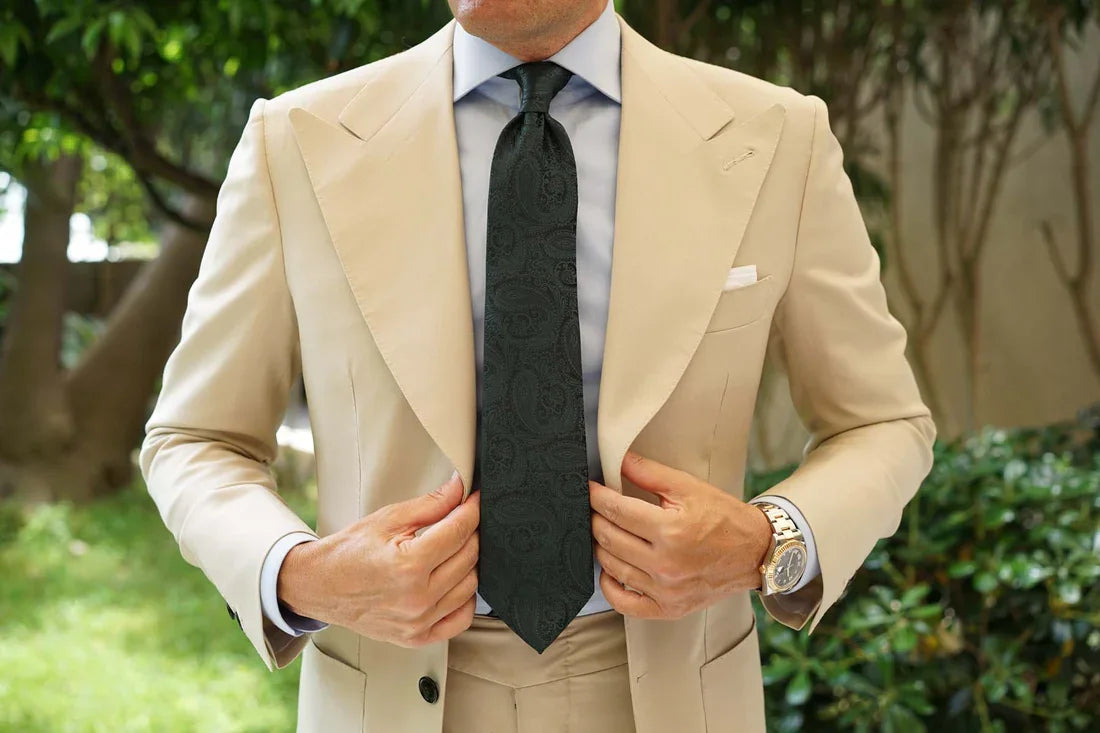
Four categories. Stripes, textures, florals and paisleys, conversation pieces.
Category one
The stripes
The first category is the one you think you already have covered. You do not.
A stripe tie is the most deployable thing a man can own. It works with a suit, with chinos and a blazer, across every level of formality a jacket-wearing man encounters. The problem is not owning one. The problem is owning one, which turns a category into a default. The navy stripe that works for everything becomes the navy stripe that works for nothing in particular, because it stopped being a choice the moment it became the only option.
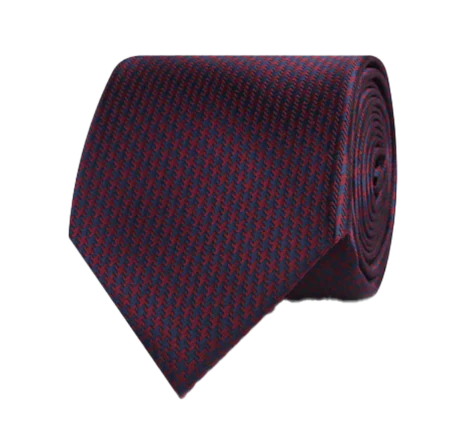
The men with the best-dressed tie drawers own four stripes minimum. A navy pencil stripe for the office. A burgundy and navy for occasions requiring authority. A warm-season stripe in navy and peach for lighter suits and brighter rooms. A silver-toned stripe for the situations where dark would feel heavy.
Four ties. Every stripe situation covered. The decision made once, not every morning.
Pick the ones your drawer is missing.
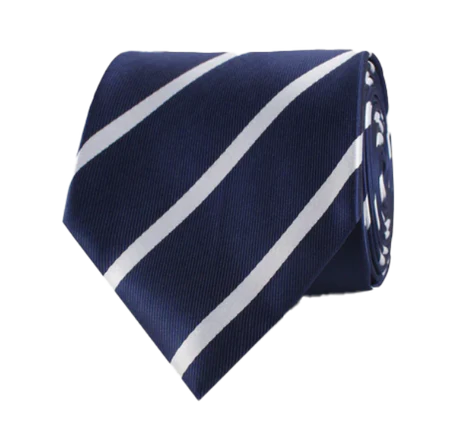
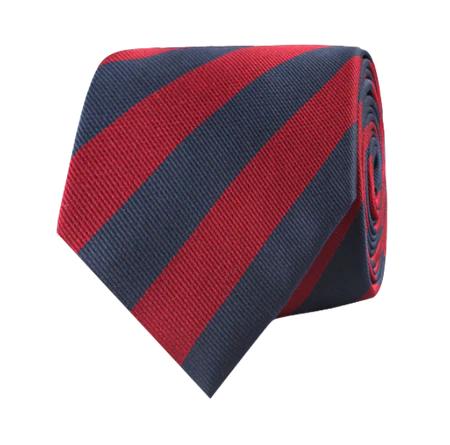
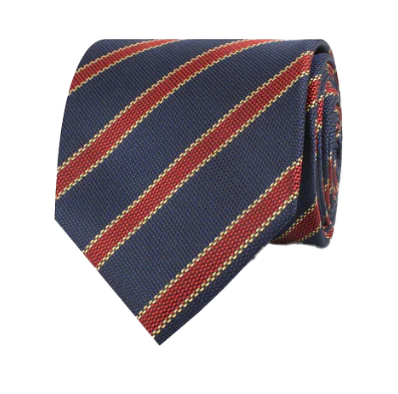
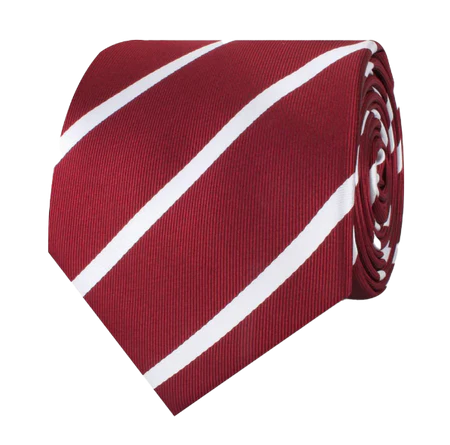
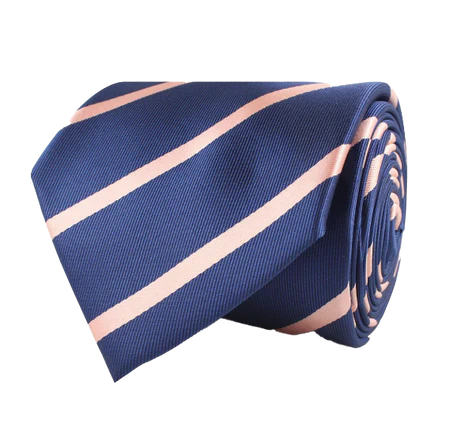
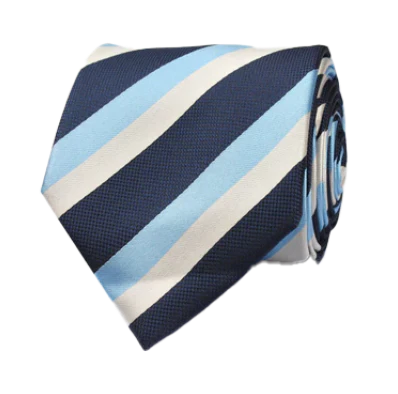
Build your bundle. Buy 3, get 2 free.
Build your bundleCategory two
The textures
The second category is the one your drawer is definitely missing.
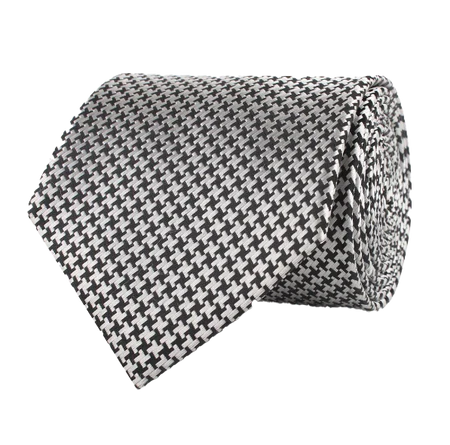
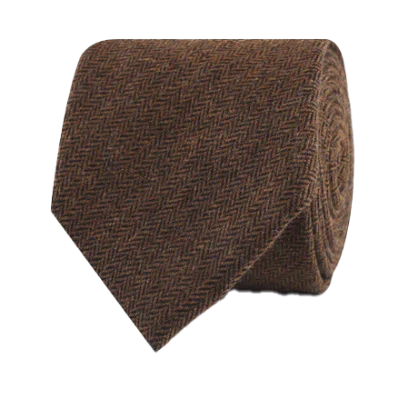
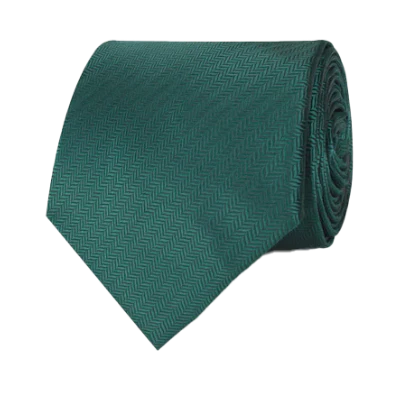
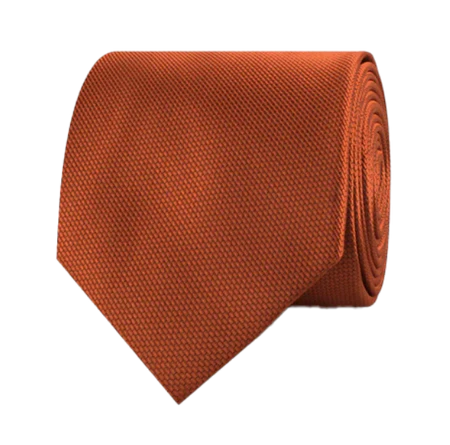
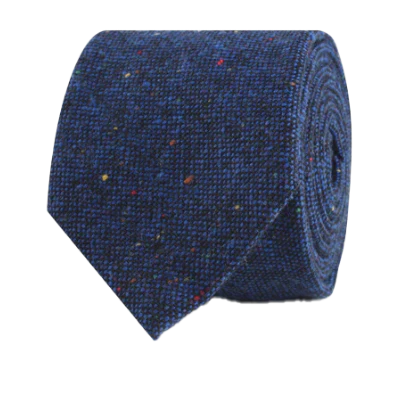
A textured tie does something a stripe cannot. It takes the outfit that is correct but not considered, the plain white shirt and the dark suit, and makes it look like a decision was made. A houndstooth, a herringbone, a donegal weave introduces visual depth without introducing a pattern. It is the difference between a man who got dressed and a man who thought about getting dressed.
Most drawers have none of these. Which means adding one changes more than adding a fifth stripe ever could.
You have read this far. Keep going. The next two categories are where it gets interesting.
Category three
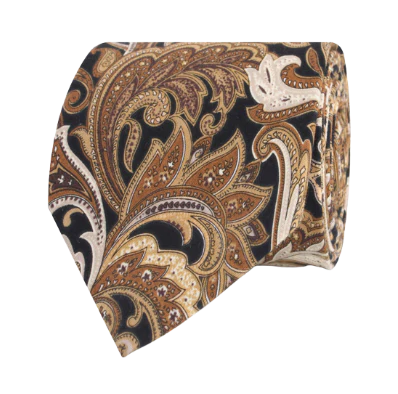
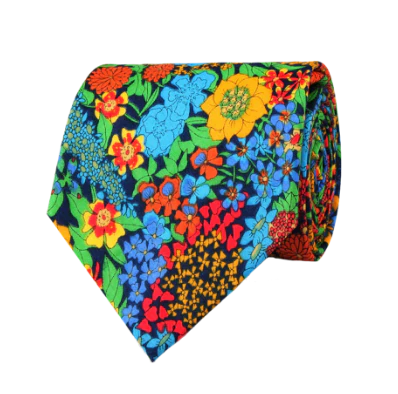
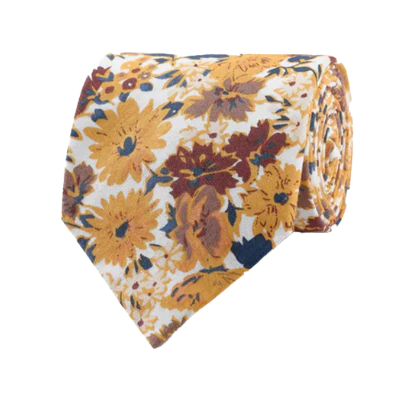
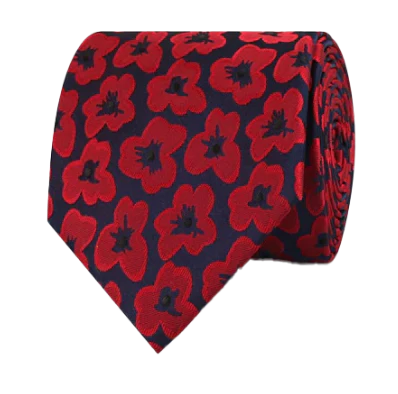
The florals and paisleys
The third category is the one most men hesitate at.
This hesitation is the reason they keep losing the room to the men who do not.
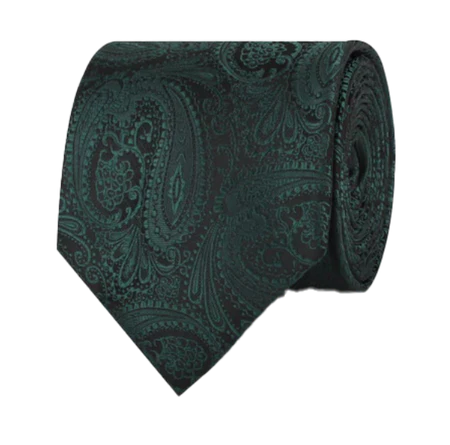
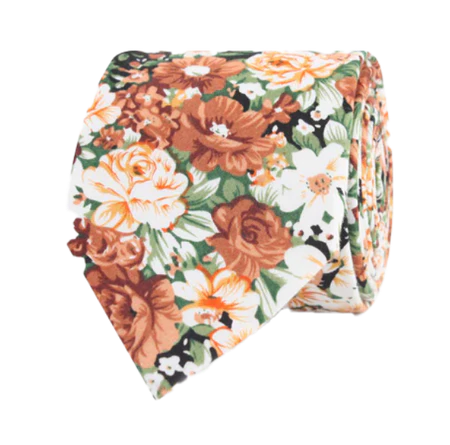
A floral tie is not a statement. It is not a risk. It is a confidence signal, which is an entirely different thing. Worn against a solid shirt and a dark suit, a well-chosen floral reads as considered and at ease in a way no stripe or texture can replicate. It is the tie that makes people look twice, then look again to understand why.
The men who own florals do not talk about them the same way they talk about their stripes. They talk about what happened when they wore them. The comment from a stranger at a wedding. The question from a colleague who had never noticed anyone's tie before. The particular feeling of walking into a room knowing the outfit is completely right.
There is one more category. It is the smallest. It is also the one people ask about most.
Category four
The conversation pieces
The fourth category is the one you only need once.
But that once will be the most remembered tie you ever wore.
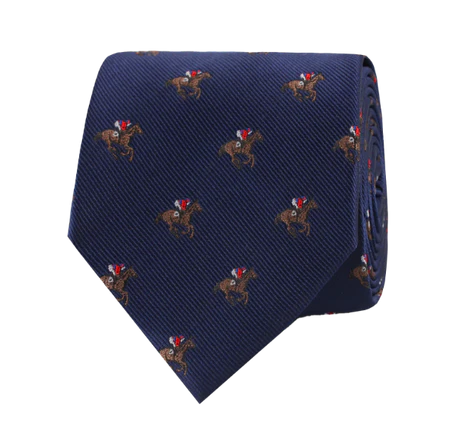
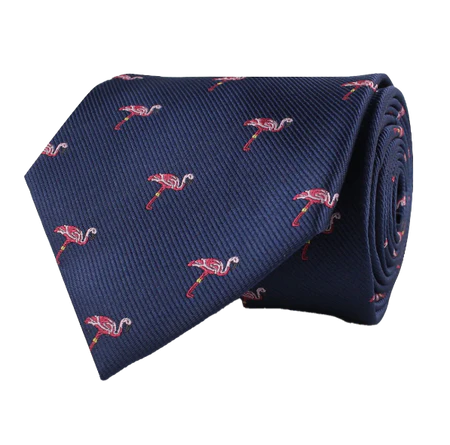
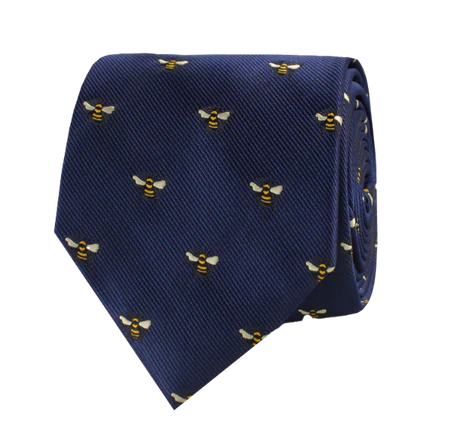
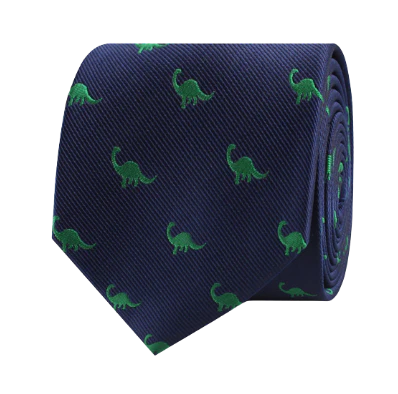
A conversation piece is not a joke tie. Understand this distinction clearly. A joke tie is worn for the laugh. A conversation piece is worn with complete intention for a specific moment, and it lands because the man wearing it knows exactly what he is doing.
Worn without conviction it reads as a costume. Worn correctly it becomes the thing people remember about an occasion long after every other detail has faded. The tie at the Derby. The flamingo at the summer wedding. The bee that generated a compliment from a man who had never in his life commented on another man's tie.
They always do.

"16,800 reviews do not lie. At some point the proof stops being impressive and starts being simply true: these are the best ties most men will ever own."
The style desk
Five ties. One decision.
The drawer sorted for good.
Now consider what you have just read.
Four categories. A stripe set with range. A texture that fixes the outfit you thought was already working. A floral that changes the way a room responds to you. A conversation piece you will wear once, perfectly.
That is five ties. Built in one decision. Covering every situation a suited man faces.
This is the bundle offer. Pick any three ties and receive two more free. No code. No minimum beyond the bundle itself. Ships in 24 hours.
16,800 men have made this decision. GQ endorsed the product. The White House wears it. The only question that remains is whether you will keep reaching for the same two ties you always reach for, or whether you will finally fix the drawer.
You already know the answer. That is why you read this far.
Build your bundleFree shipping on orders on all bundles.
16,800 five-star reviews. As featured in GQ.


